


At the heart of the community, the new town hall forms a direct dialogue with the public square, which hosts markets and civic events. For functional, economic and urban planning reasons, it does not make sense to preserve the existing town hall. While the new building is considerably larger, protruding and recessed volumes, as well as differentiated building heights, ensure that the scale is never overpowering. To the north, the building stays low and set back to respect adjacent residential developments, while to the south, the facade recedes near the church, preserving clear sightlines to the historic church spires.
In order to fulfil the wishes of the client, the new town hall conveys transparency, democracy and openness towards citizens’ concerns, appearing as a special and particularly important public building. Patrons access the building via a spacious central zone, which provides ample space for unofficial functions and clear orientation. To optimize public workflows, highly frequented areas are located on the first floor, including the citizen’s advice office, registry office, central services, and public toilets, alongside a separate office area with independent access designed for flexible future integration.

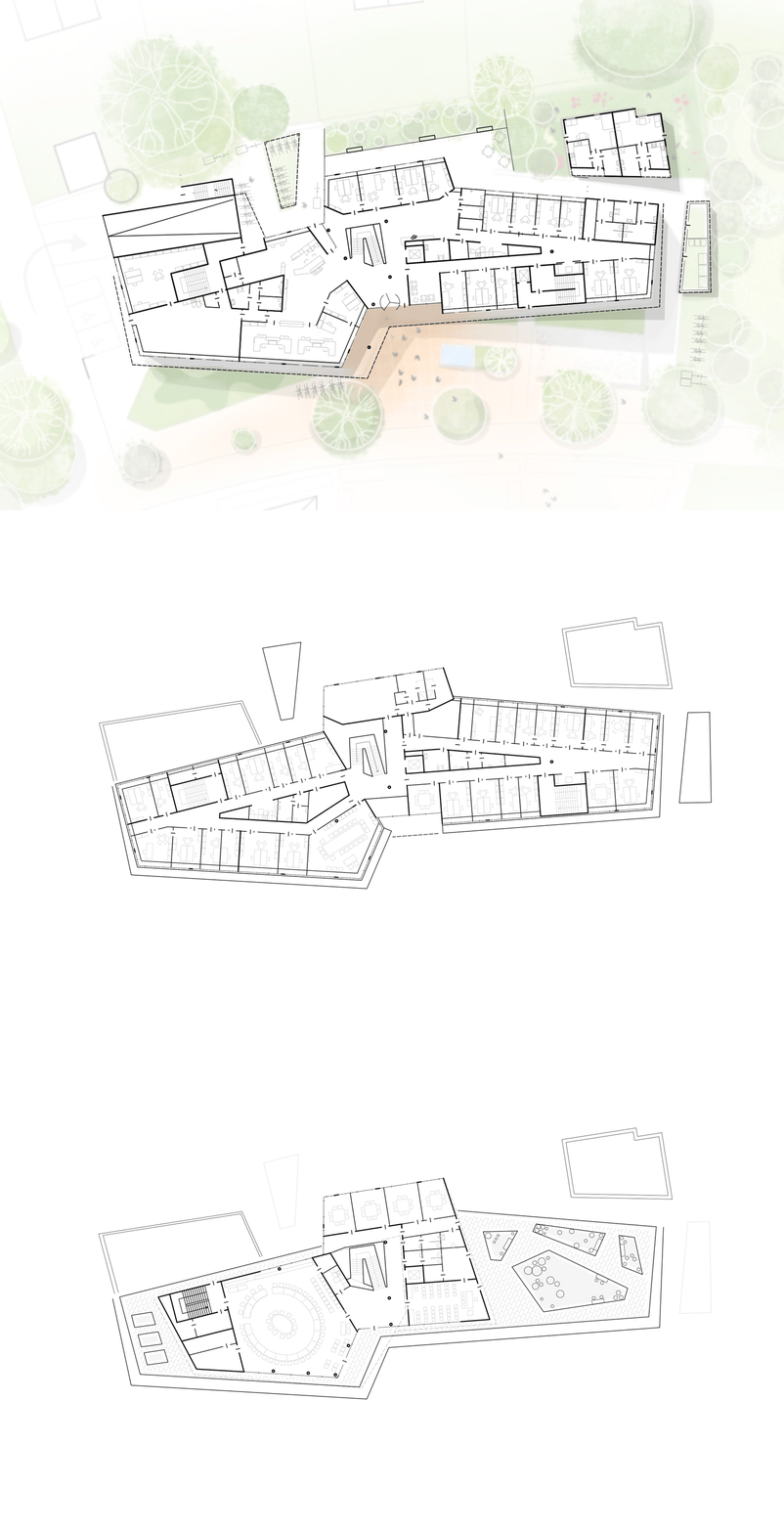


The administrative departments are appropriately aligned and linked together in a wide range of different ways. The first floor houses the building authorities, the Department of Civil, Structural and Environmental Engineering, and the health and safety facilities with changing rooms. The second floor contains the main office, the office of the mayor with views across the square, the financial administration, and the employees’ recreation room. The facade consists of continuous strips of glazing and casement windows without lintels in order to maximize daylight entry, while closed parapets clad with wooden elements of mature silver fir create a warm and pleasant ambience. The formwork of the parapet acts as a static sunscreen, eliminating the need for movable sunscreen devices.
On the third floor, the assembly hall and the civil registry room break free from the strict grid of the office spaces, unfolding their form and function more freely around a central stairwell. As they do not require so much space, they do not occupy the whole floor area, leaving room for roof greening and terrace areas. From these elevated platforms, the view extends across the town hall square, beyond the church spires, and as far as the surrounding developments, giving the area its desired special flair.


- Client
- Gemeinde Gröbenzell
- Architects
- Behnisch Architekten
- Address
- Gross Area
6.677 m² / 71,871 sq.ft.
- Gross Volume
22.241 m³ / 785,441 cu.ft.
- Competition
2016, 1st prize
- Photography
Behnisch Architekten / Thomas Hoffmann-Kuhnt
- Downloads
- Download PDF


