


At a site that was once an open gathering space, the building reinterprets the idea of an entrance and meeting point. It connects the preserved brick structures of the former military site with the surrounding landscape and the new residential areas by the lake. In this way, it establishes a clear identity while remaining adaptable over time.

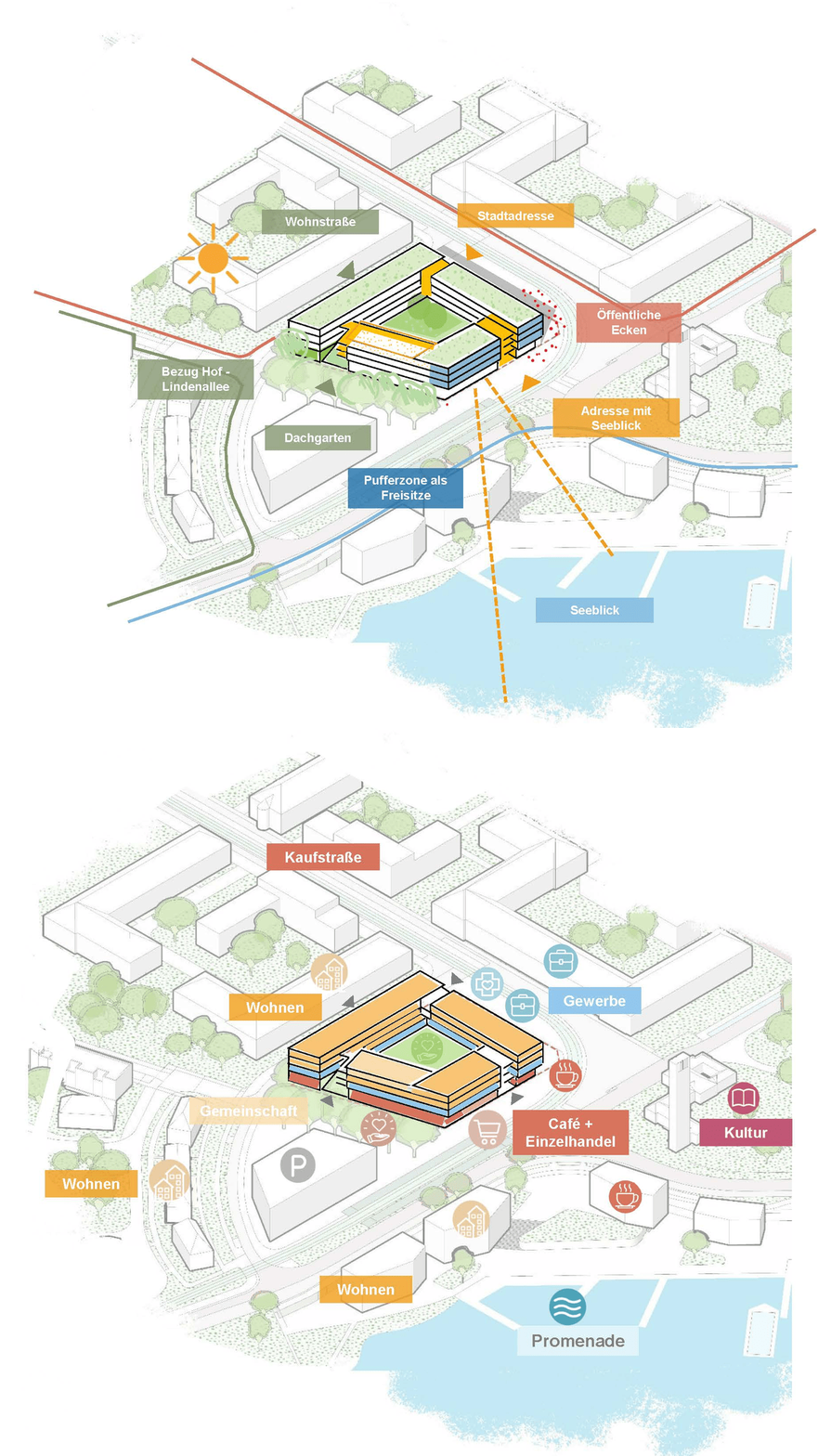


The design is based on a robust and flexible structure. Instead of defining a fixed program, the building allows for changing uses. Retail and gastronomy activate the ground floor, while the upper levels accommodate both office and residential functions. This reflects contemporary ways of living and working, where boundaries are increasingly fluid. A careful balance between permanence and flexibility defines the project. The main structure provides long term stability, while interior layouts can be reconfigured as needed. Modular units allow spaces to be combined or separated with minimal effort, supporting change over time.


The spatial organization strengthens the building’s role within the urban fabric. Clear access points and varied circulation create orientation and identity. Connections between courtyard, streets, and the nearby lake enhance the relationship between architecture and landscape. Outdoor spaces such as balconies, loggias, and a shared courtyard contribute to a high quality of living and working.
Material and construction follow a resource conscious hybrid approach using timber, steel, and concrete. Prefabricated timber elements in the upper floors reduce embodied carbon and allow for efficient construction. The facade responds to its context by reinterpreting the tones of the surrounding brick buildings in a contemporary way.


- Client
- BUWOG Bauträger GmbH Rankestraße 21 10789 Berlin
- Architects
- Behnisch Architekturbüro
- Address
Former Krampnitz Barracks, Potsdam
Germany- Competition
2024
- Gross Area
11.810 m² / 12.7122 sq. ft.
- Gross Volume
54.848 m³ / 1.936.939 cu.ft.
- Downloads
- Download PDF


Sustainability is an integral part of the concept. Alongside energy and material efficiency, the design focuses on adaptability, durability, and social value. Green spaces and climate responsive strategies improve the microclimate and support a resilient environment.
Krampnitzer Tor goes beyond the idea of a single building. It provides a flexible framework that supports community and longterm development, with the capacity to evolve alongside its users and the city.


